
Brainspotting, EMDR and Trauma Therapy
Heal what happened without reliving it again and again.
Brainspotting is a brain-body trauma therapy that uses where you look to reach stress and memories that talk therapy alone can miss. Meet with Debra Nelson, MA, LMFT, at our calm Forest Lake office. Prefer EMDR? Debra and Nicole Lindberg, MSW, LGSW, LADC, are both trained in EMDR therapy. You set the pace, and you stay in control the whole time.
How It Works
Brainspotting was developed by David Grand, PhD. The idea is simple: where you look affects how you feel. Your therapist helps you find an eye position, called a brainspot, that connects to a stuck feeling, memory or body sensation. Holding that spot while you notice what comes up helps the deeper, survival part of the brain process it.
Many people say it feels gentler than talking through a trauma story. Learn more from Brainspotting.com or read our brainspotting FAQs.

Is It Trauma?
Trauma is not only about big events. It is about what stays stuck in your body afterward. If several of these sound familiar, it may be time to talk with a trauma therapist.
Memories, nightmares or flashbacks that show up when you do not want them.
Steering clear of places, people or topics that bring it back.
Feeling jumpy, irritable or easily startled, even when things are calm.
Restless nights and a mind that will not settle during the day.
Pulling away from people or struggling to feel joy.
Tight shoulders, headaches or a stomach in knots that talk therapy has not touched.
These are common PTSD symptoms described by the National Institute of Mental Health and the VA National Center for PTSD. This list is not a diagnosis. A licensed clinician can help you sort it out.
Who We Help
Tap a tab to see how brainspotting supports people like you.
Brainspotting can help with single events like car accidents, medical scares or sudden loss, and with long-term trauma from abuse, neglect or unsafe relationships. You do not have to tell the whole story to make progress. Read our trauma FAQs.
Many veterans, police, firefighters, EMTs and nurses carry stress that is hard to put into words. Brainspotting works with the body, not just the story. See our military and veteran FAQs, and connect with the Wounded Warrior Project for added peer support.
Old stress often shows up today as worry, panic, low mood or burnout. Brainspotting pairs well with our anxiety and depression therapy and HeartMath biofeedback to calm the nervous system.
Athletes, musicians, public speakers and professionals use brainspotting to clear blocks, stage fright and the yips that keep them from performing at their best. Learn who brainspotting helps.
Your First Sessions
Sessions are calm, private and paced by you. Here is how a typical session flows.
1
You share what brings you in and what feels safe to work on. Your history is heard, not rushed.
2
Your therapist slowly moves a pointer across your field of vision and watches for small reflexes that show where your system reacts.
3
You hold that eye position and notice thoughts, feelings and body sensations as they shift. You stay aware and in control.
4
You end grounded and calm, with tools to take home. Processing can continue gently over the next few days.
Curious about cost? Brainspotting is generally private pay, and HSA and FSA cards are accepted. See insurance and rates or what to expect at your first visit.
Compare Trauma Therapies
Both are brain-body therapies for trauma and PTSD that use the eyes. EMDR is one of the most studied trauma treatments and appears in the American Psychological Association PTSD guideline. Brainspotting grew out of EMDR and is more open-ended. Learn more about EMDR from EMDRIA.
| Feature | Brainspotting | EMDR |
|---|---|---|
| Developed by | David Grand, PhD (2003) | Francine Shapiro, PhD (1987) |
| Eye work | Holds one eye position (the brainspot) | Guided back-and-forth eye movements |
| Structure | Flexible and client-led | Structured eight-phase protocol |
| Sound | Often soft bilateral music | Taps, tones or eye movements |
| Retelling the story | Not required | Brief focus on target memories |
| Research | Newer, research still growing | Widely studied; in the APA PTSD guideline |
We offer both. Debra Nelson, MA, LMFT, and Nicole Lindberg, MSW, LGSW, LADC, are both trained in EMDR, and Debra also provides brainspotting. Not sure which fits? We will help you decide at your first session, or read our brainspotting vs EMDR FAQs.
Whole-Person Care
Trauma lives in the brain and the body. Many clients combine brainspotting with tools that keep the nervous system calm between sessions. See all specialties.
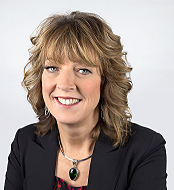
Brainspotting and EMDR
Debra is the owner and lead therapist at Beyond the Brain Therapies Inc., with more than 30 years in marriage and family therapy, community mental health and Minnesota family-court services. She founded Counseling and Mediation Solutions in 2002 and Beyond the Brain Therapies Inc. in 2016. She provides brainspotting and is trained in EMDR therapy.

Your EMDR Therapist
Nicole is trained in EMDR and specializes in anxiety and substance use, with 25+ years in mental health, crisis response and recovery services. Read Nicole’s profile.
Brainspotting FAQs
More answers live in our FAQ and resource hub.
You and your therapist pick a goal and talk about what feels safe. Your therapist then guides your eyes to a brainspot while you notice thoughts and body sensations. You stay aware and can pause at any time.
No. Brainspotting does not require you to retell your story over and over. You share what you are comfortable sharing, and you set the pace.
Brainspotting is a newer approach and research is still growing. Many clients and clinicians report good results, especially when it is part of a full treatment plan. Learn more at Brainspotting.com.
EMDR uses a structured protocol with back-and-forth eye movements. Brainspotting holds a single eye position and is more client-led. We offer both, so you can choose what fits. See the comparison table above or our EMDR FAQs.
It depends on your goals and history. Some people work on one focused issue in a few sessions, while complex trauma usually takes longer. Your therapist will talk through a plan with you.
Brainspotting is generally private pay. HSA and FSA cards are accepted. Counseling may be billed to participating plans. See insurance and rates.
Yes. Debra Nelson, MA, LMFT, and Nicole Lindberg, MSW, LGSW, LADC, are both trained in EMDR therapy, and Debra also provides brainspotting. Both see clients at our Forest Lake office. Book with Debra or book with Nicole.
Get Started
Book online, call our office, or send a secure message with your questions.
Pick an open time in our secure SimplePractice portal: Debra for brainspotting or EMDR, or Nicole for EMDR.
Office: 407 West Broadway Avenue, Forest Lake, MN 55025. Get directions or visit our contact page.
HIPAA-secure form. Please do not use it for emergencies.
If you are in danger, call 911. Call or text 988 for the Suicide and Crisis Lifeline. Veterans can dial 988 and press 1 for the Veterans Crisis Line. For treatment referrals, call the SAMHSA National Helpline. More in our resource hub.
Take the first step toward feeling safe in your own body again. Book brainspotting in Forest Lake today.